Why Leap Years Don’t Actually Happen Every Four Years
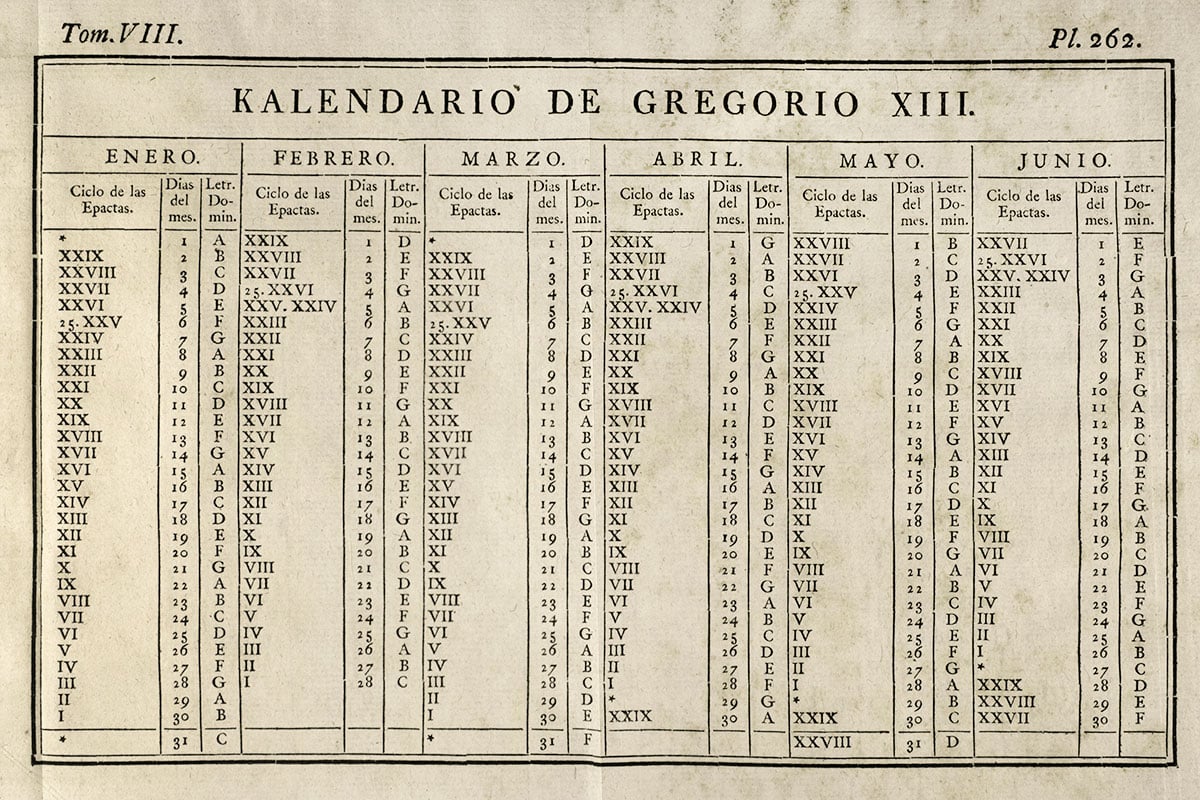
Here’s where the Julian calendar’s subtle flaw compounds into something real. Sosigenes’ system pegged the year at 365.25 days — close, but 11 minutes too long. Eleven minutes a year sounds harmless. Over centuries, it isn’t. By the 1500s, the Julian calendar had drifted a full 10 days behind the actual solar year as it had stood in 325 CE, when the Council of Nicaea tied Easter to the spring equinox. Ten days off means your religious holidays are increasingly seasonal fiction.
Pope Gregory XIII was not amused. Like Caesar before him, he was not the mathematician in the room — he hired Italian scholar Aloysius Lilius and German mathematician Christopher Clavius to work it out. Their fix was a rule that sounds bureaucratic but is genuinely clever: any year divisible by 100 skips the leap year, unless it’s also divisible by 400. So 2000 was a leap year. The years 1700, 1800, and 1900 were not. Neither will 2100 be. This shaved enough time off the average year to bring the Gregorian calendar much closer to orbital reality.
Close Enough Is Still Not Perfect
The Gregorian calendar runs 365.2425 days on average. Earth’s actual orbit: 365.24219. The gap is tiny — about 26 seconds per year — but it accumulates. By the year 4818, whoever or whatever is living here will face a calendar drift of one full day and a choice about what to do with it. That’s someone else’s problem.
Less abstract: scientists have also had to add 27 leap seconds to the clock over the past 50 years, because Earth doesn’t rotate at a perfectly uniform rate. Earthquakes, tidal forces, and wind patterns all nudge the length of a day in small, irregular ways. When the discrepancy grows large enough, atomic clocks have to tick to 23:59:60 before flipping to midnight. In 2015, global markets paused trading over a single added second. The scientific community has since agreed to retire the practice of adding leap seconds by 2035.
The Rarest Birthday on the Planet
About 5 million people worldwide were born on February 29. The odds are 1 in 1,461 — long but not impossible, as the Keogh family of Ireland proved three times over. Grandfather Peter Anthony was born on leap day in 1940. His son Peter arrived on February 29, 1964. His granddaughter Bethany was born on February 29, 1996. Three generations, one shared birthday that shows up every four years.
These people — called leapers, leaplings, or leapsters — typically celebrate on February 28 or March 1 in non-leap years. Scotland has historically believed that being born on leap day means a life of untold suffering. The Keogh family, thankfully, is Irish.