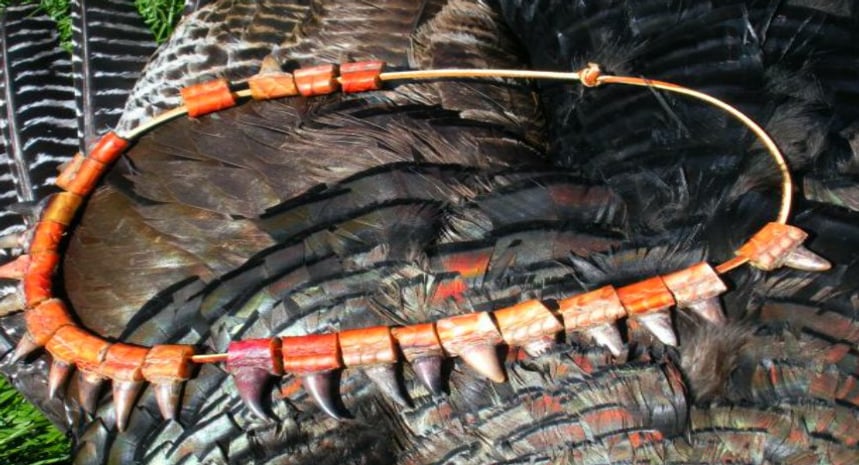
The Part of the Turkey Most Hunters Leave Behind
Every spring turkey season, hunters pack out beards and fans by the dozens. These two trophies have become the standard keepsakes of a successful hunt — framed, mounted, and hung on walls across the country. But there is a third trophy hiding on every mature gobbler that most hunters discard without a second thought: the spurs. Sharp, curved, and built over years of growth, turkey spurs are among the most striking natural structures a wild bird produces. Once you know how to remove and display them, throwing them away starts to feel like leaving a rack in the woods.
What Turkey Spurs Actually Are
Spurs are bony growths that extend from the lower leg of a male turkey, technically called a tom or gobbler. They are covered in a hard keratinous sheath — the same material that makes up fingernails and bird beaks — and they sharpen naturally as the bird moves through brush and over rough terrain. Gobblers use spurs as weapons during fights with rival males, raking and jabbing to establish dominance during breeding season. The length and curvature of a spur are direct indicators of a bird’s age. A jake, or juvenile male, will have short nubs barely worth noting. A mature two-year-old tom typically carries spurs around an inch long. A bird of three or more years can sport curved spurs exceeding an inch and a half, sometimes curving dramatically like a fishhook.