Twenty Minutes and Then They’re Gone
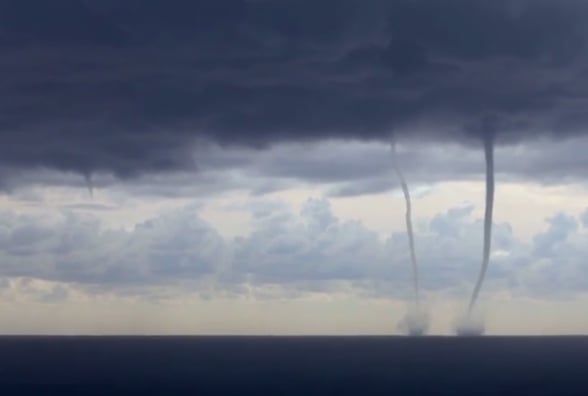
Fair-weather waterspouts have a surprisingly short lifespan. From formation to dissipation, the entire event typically runs around 20 minutes. Because they are tied to slow-moving cumulus clouds rather than large storm systems, they do not travel far from where they first appeared, and they rarely intensify beyond their initial state. Once the atmospheric conditions that created them shift even slightly, usually as the associated storm begins to fully develop, the waterspout loses its organizing energy and collapses back into the sea. The footage filmed in Italy almost certainly shows fair-weather waterspouts at work, which would explain why they appear relatively contained and do not seem to be embedded inside a larger, violent weather system.
Warm Air and Humidity Are the Essential Ingredients
Waterspouts of either type depend on a specific combination of atmospheric conditions. Warm air temperatures and high humidity are non-negotiable ingredients, because both are required to sustain the energy budget of a rotating atmospheric column. Without sufficient moisture in the air, the visible water mist that makes a waterspout visible and coherent simply cannot form at the required scale. This is why waterspouts are overwhelmingly concentrated in tropical and subtropical regions of the world, where sea surface temperatures stay high and the lower atmosphere is loaded with water vapor for much of the year. Temperate latitudes do see them occasionally, including along parts of the European Mediterranean coast, but the global hotspots are clustered in warmer climates.
Florida Keys Sees Around 400 Per Year
The Florida Keys hold a well-documented distinction as one of the most waterspout-prone places on Earth. National Geographic puts the figure at approximately 400 waterspouts per year in that region, a number that reflects the near-perfect atmospheric setup the Keys provide. Warm Gulf Stream waters keep sea surface temperatures elevated year-round, and the humid subtropical air above them creates the kind of unstable atmospheric column that waterspouts need to organize. The geometry of the Keys also plays a role, as the shallow shelf waters heat quickly and create sea breezes that collide and generate the updrafts waterspouts require. For residents and regular visitors, waterspouts offshore are simply a routine feature of summer afternoons, spectacular enough to photograph but rarely a cause for serious alarm.