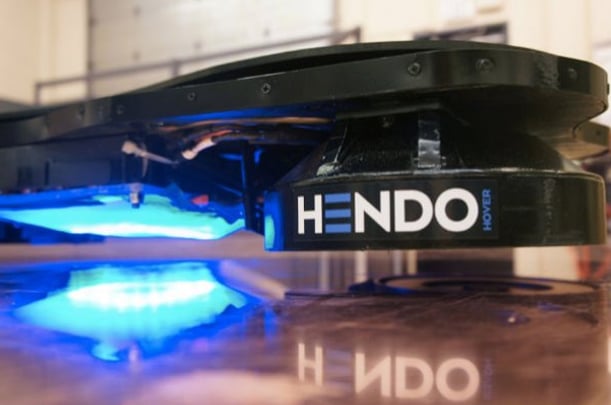
The Promise That Back to the Future Made
The 1989 film Back to the Future Part II showed Marty McFly gliding effortlessly above the pavement on a pink hoverboard, and for a generation of viewers it felt like a reasonable prediction — something science would deliver within a decade or two. It didn’t quite work out that way. Decades of engineering effort produced all kinds of two-wheeled scooters that marketers slapped the hoverboard label onto, but none of them actually hover. The real challenge isn’t design or manufacturing — it’s fundamental physics. Magnetic levitation, the only plausible technology for true hover, resists human control in ways that took researchers years to understand and even longer to partially solve. The gap between what movies imagined and what science could deliver turned out to be far wider than most people assumed.
The Physics Problem Nobody Talks About
The reason hoverboards are so hard to build comes down to a principle called Earnshaw’s theorem, established in 1842 by British mathematician Samuel Earnshaw. In simple terms, it states that you cannot create a stable, static equilibrium using only magnetic forces. When magnets repel each other — the basic mechanism behind any magnetic levitation device — they are inherently unstable. The repelling board wants to slide sideways, tip over, or shoot out from under a rider. Balancing that instability requires either active electronic corrections happening thousands of times per second, or a physical constraint that keeps the board in place. Most levitation demonstrations rely on supercooled materials or fixed tracks for exactly this reason. It is not a lack of funding or imagination that held back hoverboard development — it is geometry.