
Earth Doesn’t Care About Your Calendar
The Earth completes its trip around the sun in 365.24219 days. Not 365. Not 366. That awkward decimal, barely more than a quarter of a day, has tormented timekeepers for centuries. You can’t experience a fraction of a day, so the solution was a leap year: an extra day bolted onto February every four years to absorb the accumulating hours. Without it, the calendar would drift steadily from the seasons, and within a few centuries, July would be cold.

The math works because 0.24219 is close to 0.25, meaning four years of leftovers add up to roughly one whole extra day. Simple enough in theory. In practice, getting it right took more than two thousand years of arguing, misreading instructions, and papal intervention.
Caesar Hired the Right Guy
Julius Caesar didn’t invent the leap year. He barely understood the problem. When Rome’s calendar had grown so chaotic that farmers couldn’t trust it and priests were scheduling fake festivals, Caesar handed the whole mess to Sosigenes of Alexandria, a Greek mathematician he had met in Egypt around 48 BCE, during the same trip that produced his famous affair with Cleopatra.
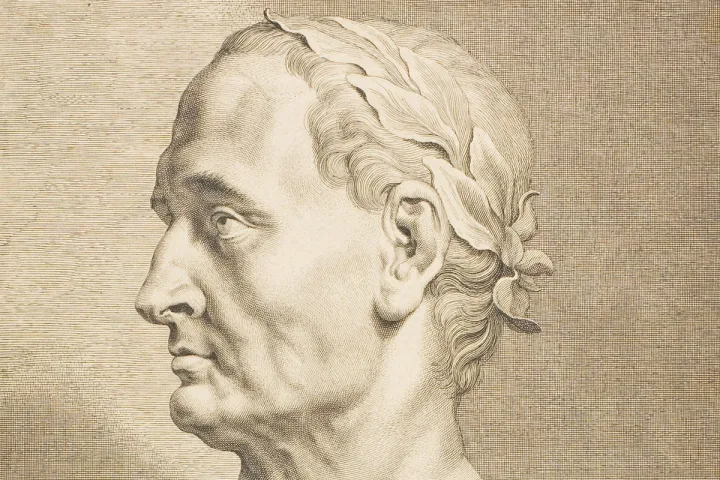
Before the Julian calendar launched on January 1, 45 BCE, Caesar added 67 days to the preceding year to reset the system. Romans called it the “year of confusion.” Then things went sideways again: a misreading of Sosigenes’ instructions led priests to insert a leap year every three years instead of four. Caesar’s heir Augustus caught and corrected the error. But the Julian calendar still carried a subtler flaw it would never shed.