Key lime pie doesn’t perform. It just delivers. There are no layers of theatrical frosting, no caramel drizzle spirals, no gold leaf pressed into the surface for a photograph. Three filling ingredients, a handful of crushed crackers, some butter. And yet this small, almost austere dessert from the southernmost edge of Florida has outlasted every elaborate trend pastry chefs have thrown at it for a hundred years.
The key lime itself is the whole argument. Smaller than a golf ball, seedier than you’d prefer, and yellow-green rather than the saturated green of regular limes, these are not glamorous fruit. They grow in the Keys the way difficult things grow in hard climates: stubbornly, concentrated, with an aroma so sharp and floral it almost crosses into perfume. Squeeze one over your hand. The scent alone explains the pie’s staying power.
The crust begins with crushed graham crackers worked together with melted butter and a measured spoon of sugar, then pressed hard into a pie dish until it compacts into something firm and slightly rough-edged. Baked, it goes golden and crisp. Some cooks push a pinch of cinnamon into the mix — a warm undercurrent that makes the lime pop harder against it. Either way, the crust is doing structural work and flavor work simultaneously, the crunch holding up against the dense, cool filling without surrendering into soggy submission.
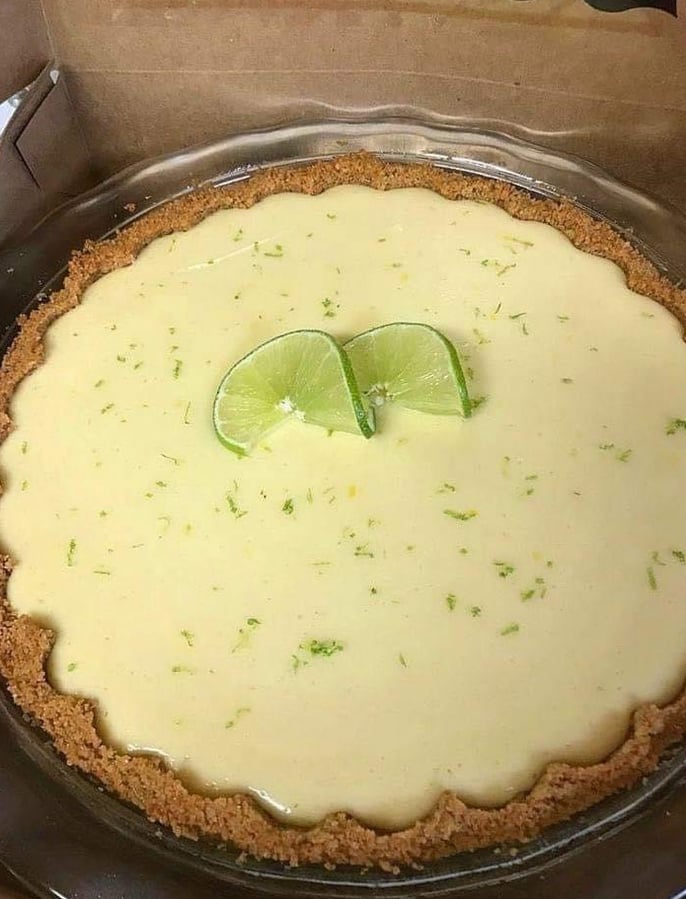
That filling is three things: key lime juice, egg yolks, sweetened condensed milk. The condensed milk brings its thick, almost caramel sweetness. The yolks bind and enrich, pulling the whole mixture toward a custard-like density. The lime juice does what key lime juice does, which is cut through sweetness like a knife through tissue paper — bright, tart, faintly floral, impossible to ignore. Baked low and slow, it sets to a glossy, silky slab that holds a clean slice edge but still trembles slightly at the center. That tremor is the sign of a well-made pie.
The topping is a character question. Whipped cream is the contemporary answer — cold, airy, sometimes scented with vanilla or a fine grating of lime zest, sitting in a soft cloud over the filling. Meringue is the original, piled into stiff peaks and browned under heat until the tips go the color of toasted bread. One is effortless elegance. The other is Sunday effort and theater. Both are correct.
Serve it cold. This is the rule, not a suggestion. Refrigerated, the filling firms to the right tension — dense but yielding, like the surface of a good panna cotta. Each forkful hits in sequence: cold cream, tart lime center, buttery crunch at the bottom. On a humid afternoon it registers somewhere between dessert and remedy.
Here’s what the pie’s simplicity actually demands: nowhere to hide. Bottled lime juice produces a flat, lifeless result — the kind of key lime pie that makes people think they don’t like key lime pie. Real key limes are the only path. The filling has to balance on a razor: too much juice and the tartness turns aggressive; too little and the condensed milk swamps everything in cloying sweetness. Getting it right isn’t complicated, but it requires attention in a way that more elaborate desserts, ironically, do not.
One last thing worth knowing: authentic key lime pie is not green. It’s pale yellow, nearly ivory, the exact color of afternoon light through old glass. The garish green versions you encounter at tourist traps are using food coloring to suggest something that isn’t there. The real pie doesn’t need the theater. It already carries the whole flavor of the Florida Keys in a single cold slice — salt air, citrus, sun, and somewhere underneath, the particular satisfaction of a thing made simply and made right.