Stuck Between Two States
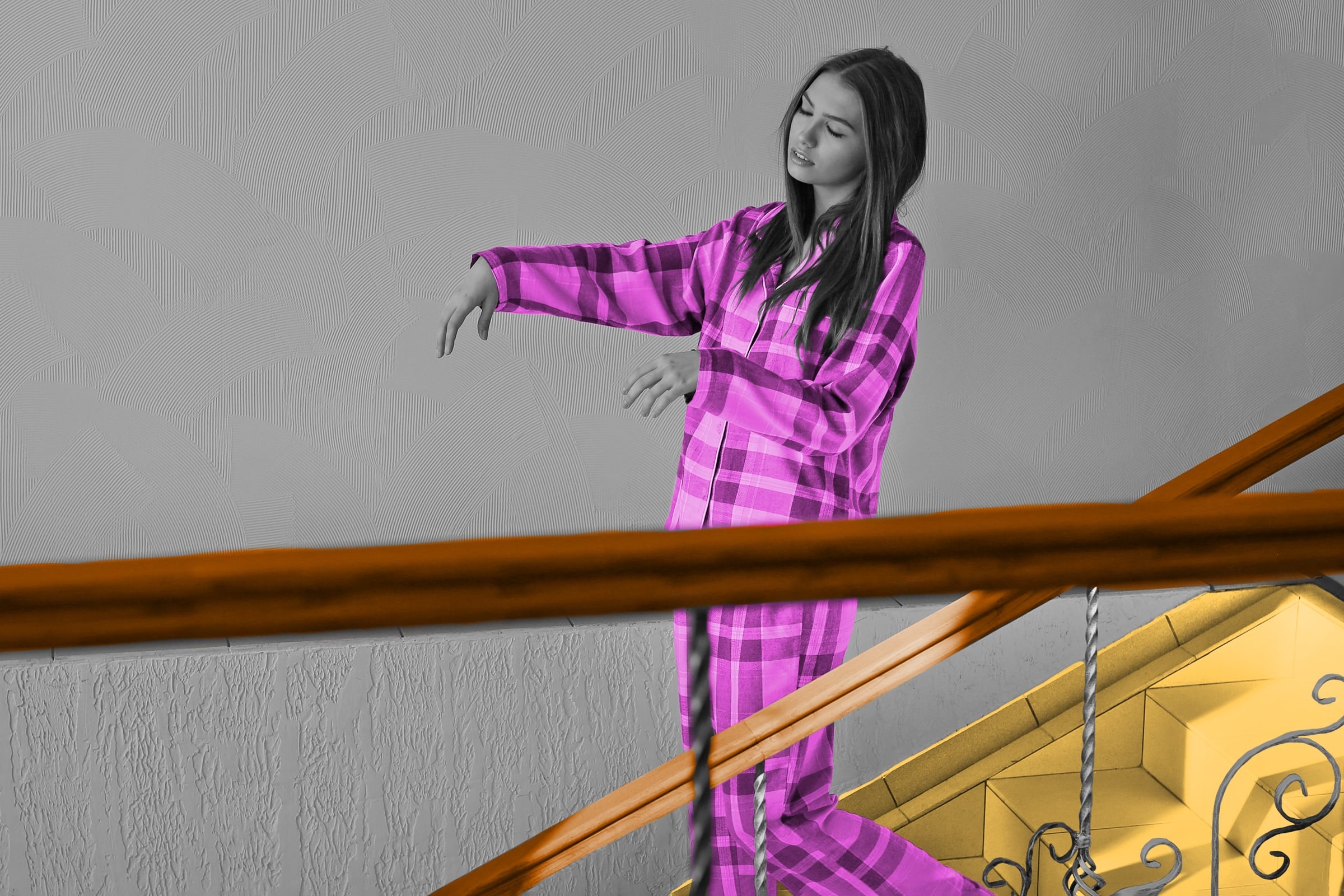
Researchers call sleepwalking a disorder of arousal. The brain attempts to wake, gets halfway there, and stalls. Think of a computer that starts booting but never fully loads its operating system — processes are running, the fan is spinning, but nothing critical is functional yet. The parts of the brain responsible for movement become active. The frontal lobe, which handles judgment, decision-making, and self-awareness, stays dark.
That’s why sleepwalkers never remember their episodes. The memory-recording systems simply aren’t online. It’s also why waking a sleepwalker abruptly can be disorienting for them — you’re forcing the frontal lobe to snap on before the rest of the brain is ready for it. They don’t snap back to normal. They surface confused, frightened, with no idea where they are or why you’re staring at them.
Some Brains Are Wired for It
Sleepwalking runs in families. One sleepwalking parent raises the odds considerably for a child. Two sleepwalking parents, and those odds climb sharply. Certain inherited traits appear to affect how smoothly — or not — the brain shifts between sleep stages. Some people have a naturally high arousal threshold: their brains resist full waking, which makes partial awakenings far more likely.
Genetics also shapes how deeply a person sleeps. Those prone to sleepwalking tend to spend more time in slow-wave sleep, the specific stage where episodes originate. For these people, the tendency isn’t a disorder they developed. It’s wired into their neurology from the start.
What Pushes the Brain Over the Edge
Even in someone genetically predisposed, something usually has to tip the balance. Sleep deprivation is the biggest culprit — when the brain is exhausted, it plunges into deeper-than-normal sleep and struggles to climb back out cleanly. Stress, fever, alcohol before bed, erratic sleep schedules, and certain medications all disrupt the architecture of sleep in ways that make incomplete awakenings more likely.
Sleep apnea is a significant but underappreciated trigger. Every time breathing stops and the brain jolts itself awake to restore oxygen, it creates another moment where full arousal might fail to happen. Repeated hundreds of times per night, those partial awakenings create dozens of opportunities for the motor system to fire while consciousness stays behind.

Common, and Usually Nothing to Fear
About one in three children will sleepwalk at least once. Most grow out of it as the brain matures and sleep architecture stabilizes. Adults can and do sleepwalk — millions worldwide — but it’s far less common. Most episodes are mild: a child sitting up in bed, mumbling, wandering briefly into a hallway before returning on their own. Occasionally the behavior gets more elaborate, but the underlying mechanism is the same.
Sleepwalking belongs to a broader family of conditions called parasomnias — states where sleep and wakefulness bleed into each other. Sleep talking, night terrors, and confusional arousals all come from the same disrupted overlap between non-REM sleep and waking. Nightmares are also parasomnias, though they happen during REM sleep and involve dreaming rather than movement. Together they reveal something genuinely strange about the sleeping brain: it is never fully off. It is always juggling multiple systems at once — and every so often, those systems fall slightly out of sync.