The Bigger Idea Behind the Hoverboard
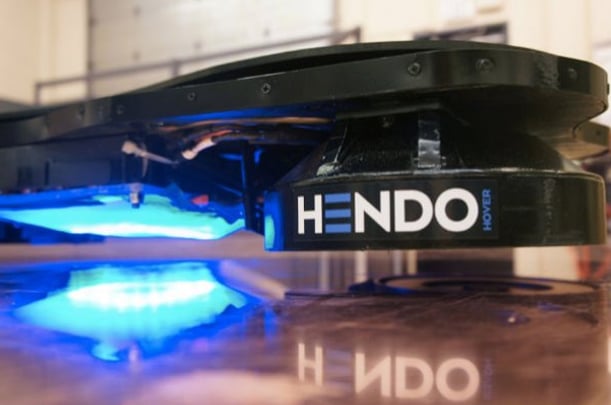
The Hendo Hoverboard was never the actual goal. Greg Henderson has been explicit that the device was built to demonstrate Magnetic Field Architecture in a way that would be immediately compelling to a broad audience. The application that originally motivated development was far more ambitious: a system that could levitate structures above their foundations during natural disasters, particularly earthquakes. Henderson’s reasoning is direct — if Maglev technology can support a 50,000-kilogram train, the same physical principles should eventually be scalable to lift a building clear of seismic movement. The hoverboard is the accessible proof. A board that floats a person is easier to film, easier to fund, and easier for an investor to understand than an abstract earthquake isolation system, but both applications rely on the same core physics.
Where Magnetic Levitation Has Been Before
The Hendo Hoverboard did not arrive without precedent. Maglev trains have operated in Japan and Germany since the 1980s, using linear induction motors to achieve speeds exceeding 300 miles per hour on dedicated track systems. Magnetic levitation in laboratory settings has produced floating frogs, spinning tops, and superconducting discs held aloft above permanent magnets at cryogenic temperatures. What Arx Pax added to this history was a compact, room-temperature levitation system powerful enough to lift a person and stable enough to stand on without requiring extreme electronic feedback loops. The MFA approach differs from superconducting levitation in that it operates at normal room temperature, using rotating magnetic fields to generate repulsive force dynamically rather than relying on exotic or expensive materials that must be kept extremely cold.
Where the Technology Could Go Next
The Hendersons were already working to expand the range of surfaces MFA could work with at the time of the Hendo launch. Each improvement in surface compatibility significantly expands practical use cases. Construction and infrastructure applications are one direction — seismic isolation represents a real engineering gap, since current systems rely on mechanical springs and rubber bearings that have physical limits. Contactless transport within controlled environments like factories or warehouses represents another direction where a track-constrained magnetic platform would be entirely practical without requiring the open-surface freedom that a consumer vehicle would need. The hoverboard itself is unlikely to become a commuter product in the near term, but the technology platform it demonstrates has applications that do not require it to work on ordinary pavement.