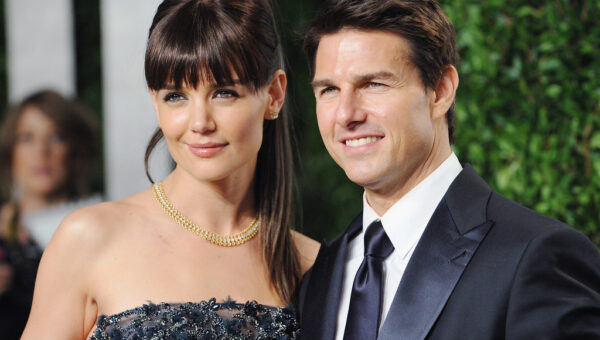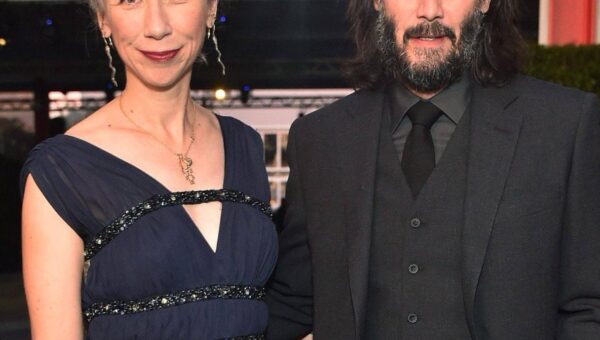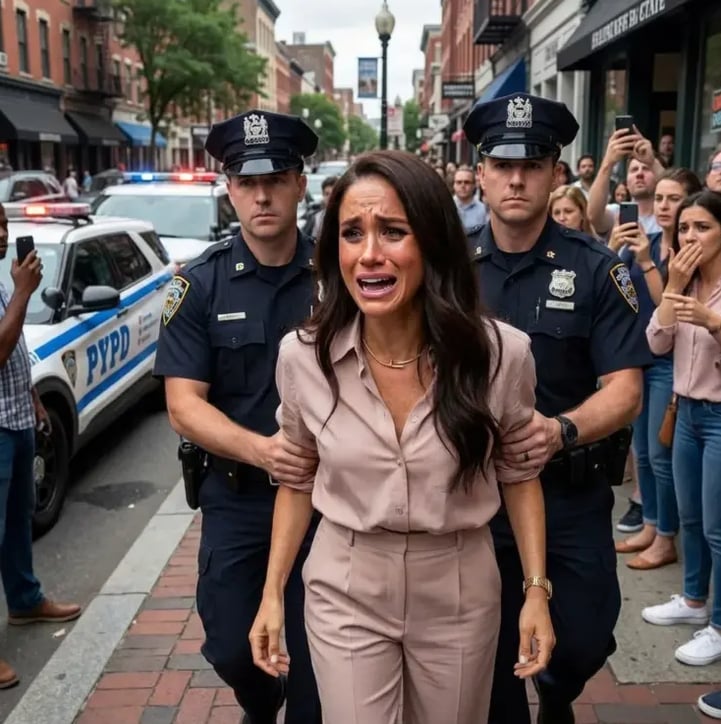
The photos hit TikTok on a Tuesday. Grainy, low-resolution, shot at the specific angle that makes anything look sinister — images purporting to show Meghan Markle, the Duchess of Sussex, being walked away by uniformed officers. Within hours, the speculation had metastasized across every platform. Prince Harry “distraught.” A secret international warrant. Financial crimes. Royal protocol violations. The internet had built an entire criminal indictment out of recycled pixels and wishful thinking.
Conspiracy theorists ran the story hard. Some claimed she had vanished from public life as evidence. Others pointed to a blurry still — clearly manipulated, clearly fake, but circulating fast enough that the corrections couldn’t keep pace with the shares. On X, the hashtag trended for most of the afternoon. On TikTok, reaction videos piled up like cars in a freeway accident, each one amplifying the last. The rumor had the perfect viral shape: famous target, dramatic stakes, just enough visual “evidence” to make skeptics pause.
So what were those photos, actually? Fabrications. The most-shared “mugshot” was a promotional still from Suits — Meghan’s old legal drama — with her expression darkened and the background swapped out by someone with too much time and a basic image editor. Other shots were genuine paparazzi photos from 2018 Kensington Palace events, cropped and reframed until they resembled something from a police procedural. The “handcuff” images were AI-generated, and not even particularly convincing ones on close inspection. Skin textures wrong. Shadows falling from two directions. The tell-tale smoothness around the wrists.
“It’s complete nonsense. Meghan hasn’t even seen a police officer, let alone been put in the back of a squad car. These rumors are just desperate attempts for clicks.”
Sources close to the Duchess say she spent that Tuesday — the day her supposed arrest was trending globally — at her Montecito home, working on her next business venture. No sirens, no squad cars, no drama beyond the kind being manufactured by strangers on the internet. The $14 million property sits behind enough hedges and gates that the outside world barely registers. Whatever the online chaos looked like in real time, it wasn’t bleeding through the walls.
What this episode actually reveals is less about Meghan Markle and more about how misinformation travels now. A credible-looking image, a provocative caption, a platform that rewards outrage — that’s the whole recipe. The correction never catches the original. By the time fact-checkers publish their debunks, the story has already completed its arc: shared, screenshot, re-shared, screenshot again, until the fake becomes part of the ambient noise of celebrity mythology. People who “heard somewhere” that Meghan was arrested will carry that fragment forward, half-remembered, never fully corrected.
The arrest didn’t happen. The photos were fake. The warrant didn’t exist. What did exist was a coordinated appetite to believe the worst, and an ecosystem perfectly engineered to feed it. The only thing that got taken into custody this week was basic critical thinking — and nobody seems to be posting bail for that anytime soon.