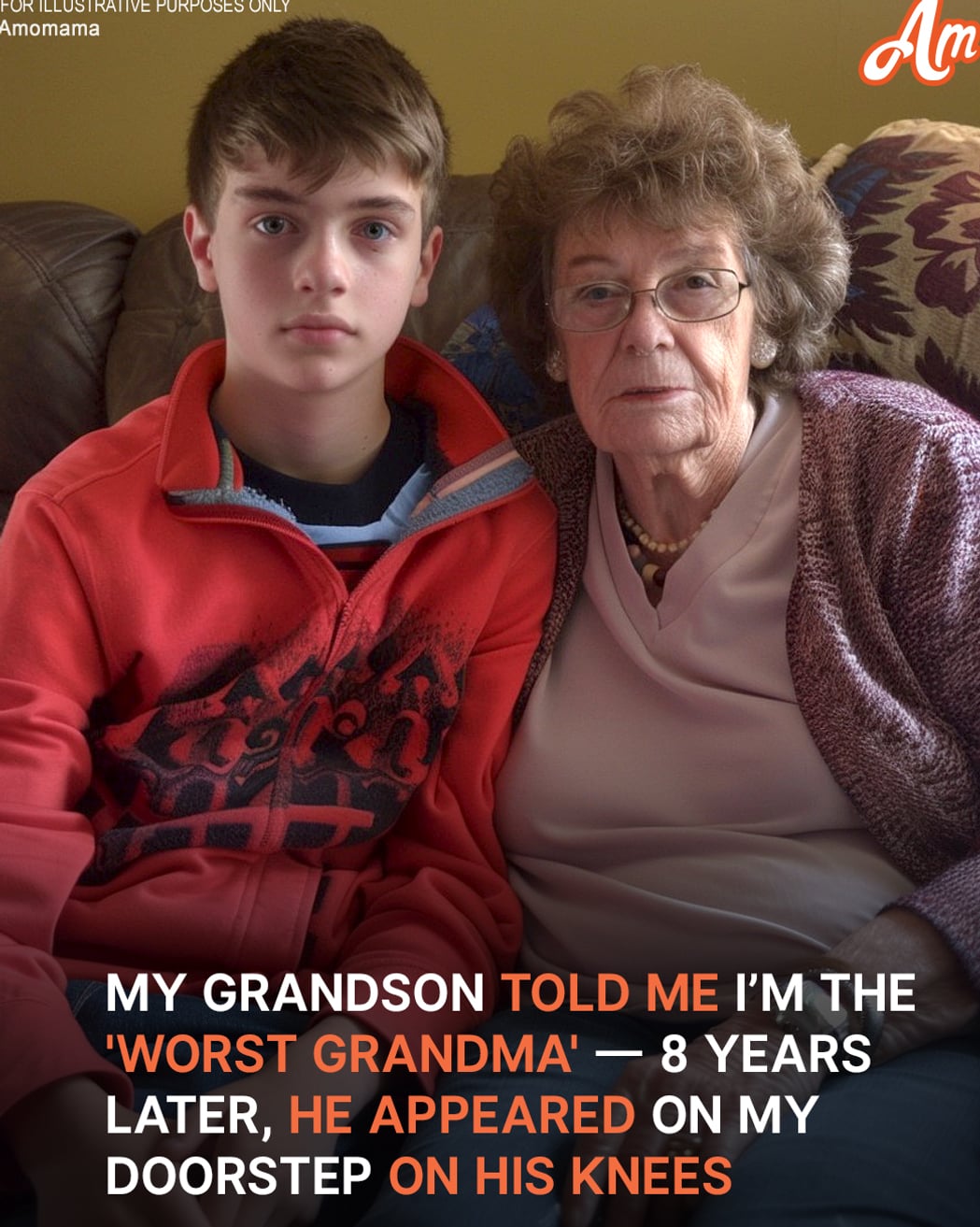
She’d saved enough that week for a few candy bars. No birthday envelope, no shiny toy, no box on the doorstep — just herself, a grandmother who had taken the bus across town because she missed her grandson’s laugh. Simon was 15 that afternoon, old enough to be cruel and young enough not to know it. He barely looked up from his phone when she walked in. She stood in his living room like furniture, trying not to take it personally. She took it personally.
When she slipped to the bathroom to collect herself, she heard her daughter Sally go at him from the hallway. She came all the way here for you. And then Simon’s voice came through: sharp, dismissive, honest in the way embarrassed teenagers can be. His friends got cash from their grandmothers, gadgets, gift cards. He never got anything. Not even candy. She dried her face and went upstairs to offer him the candy bar she’d bought. He told her she’d ruined his afternoon. She told her daughter she needed to get home to help a neighbor — a lie, a small one — and left before she could fall apart in front of them.
“You’re the worst grandma.”
That night Simon called to apologize. She could hear in his voice that Sally had made him dial. She thanked him, said goodnight, and cried until she slept. Years passed. His family relocated to another city and the visits stopped. She filled the quiet with books and a garden she tended more carefully than necessary, deadheading roses and staking tomatoes, tasks that required just enough attention to crowd out longing. She didn’t speak to Simon again. Not once in eight years.
Then a Tuesday. She was putting soup on when the doorbell rang. On her front step stood a tall young man with her grandson’s eyes, holding nothing. Hi grandma, he said, soft, almost a question. Before she could respond he dropped to his knees and wept — not polite crying but the heaving, full-body kind that takes years to accumulate. “I was selfish and stupid and I wasted so much time,” he kept saying. She pulled him up. Hugged him the way she’d been holding that hug in reserve for eight years.
Inside, over soup she reheated, he talked for a long time. He’d graduated, landed a job at a top accounting firm, and somewhere around age 16 — the year after that afternoon — he’d felt the shame settle into him like a stone and never quite leave. He was too embarrassed to call, too embarrassed to show up without something real to offer, so he waited and worked and saved instead. He had enough now to buy a house in her neighborhood. His company was transferring him. He wanted her to move in. She told him she didn’t want to be a burden. He told her that was the most ridiculous thing she’d ever said.
She agreed to move in. Eventually Simon married, had children, and made it a condition of wherever they lived that his grandmother came too. She helped with the great-grandchildren. She got along with his wife. She had more family dinners in her seventies than she’d had in the previous decade combined. The candy bar she’d brought him that afternoon cost maybe a dollar fifty. The lesson he took from throwing it back in her face cost him eight years. Some debts are like that: quiet, patient, accumulating interest the whole time you’re looking away.