The Firefighter Who Ran Toward It
While passengers fled the fire, a firefighter ran straight into it. That’s the job. That’s always been the job. He didn’t make it out.
His death is the weight the survival story carries. Emirates released a statement of condolences to his family. Survivors who stood on the tarmac watching the aircraft burn — shaking, some barefoot — knew their lives had cost something real.
Ten passengers were taken to hospital with injuries. None were life-threatening. The emotional damage is harder to inventory.
What Investigators Are Looking At
Wind shear is the leading theory. A sudden shift in wind speed or direction during descent can strip lift from a plane’s wings in seconds, making a controlled landing almost impossible to execute. Pilots rank it among the most dangerous conditions they face on approach.
Passengers also recalled the pilot’s pre-landing warning about the landing gear. Whether that malfunction was real, partial, or precautionary hasn’t been confirmed. Aviation investigators will spend months parsing black box data, maintenance logs, and weather records before drawing conclusions.
The Airport Goes Quiet
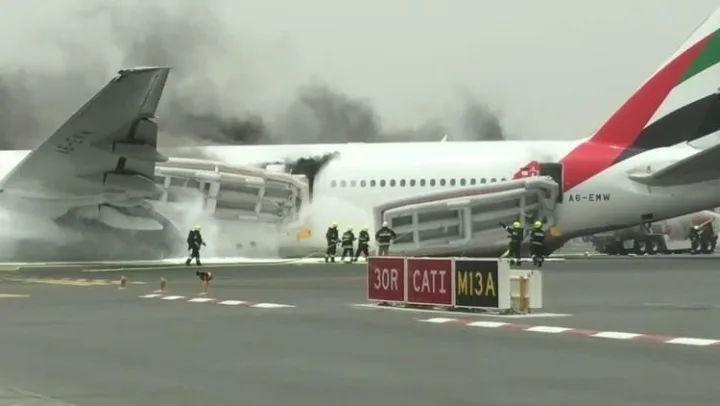
Dubai International, one of the busiest airports on earth, shut down. Flights were diverted. Departures stalled. The burning wreck on Runway 12L had to be cleared before normal operations could resume, and clearing it meant waiting for the fire to die and the metal to cool.
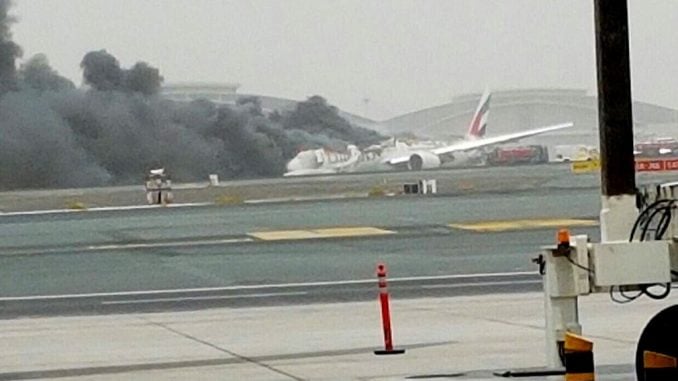
Footage of the burning plane spread globally within hours — the orange glow against the tarmac, the dark column of smoke visible from miles away. For the aviation industry, every incident like this becomes required reading: what held, what failed, what the crew did right when everything else went wrong.
What Kept 300 People Alive
The Emirates cabin crew trained for exactly this. Muscle memory in a smoke-filled cabin is worth more than any number of safety cards in a seat pocket. They kept the evacuation moving when panic could have turned it fatal.
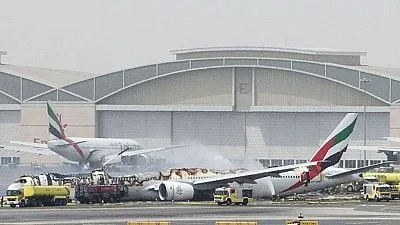
Ground rescue teams worked through heat and toxic smoke to reach anyone who couldn’t make it out alone. The speed of the response — fire crews on scene, slides deployed, tarmac cleared for evacuation — compressed what could have been a catastrophic death toll into a single name on a memorial.
Flying remains statistically the safest way to travel long distances. This incident doesn’t change that math. What it does is remind anyone who sat on that runway in their socks, watching their plane burn, exactly how thin the margin between those statistics and something else entirely can be.