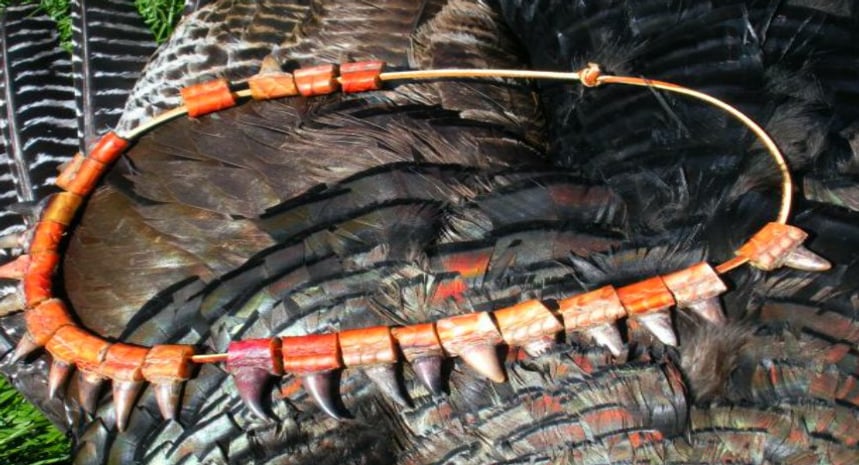
Preserving the Spurs for the Long Term
Fresh spurs pulled straight from the field will dry naturally if left in open air, but the process can take several days and the bone may crack slightly as moisture escapes. A more controlled approach is to let the cut pieces dry slowly in a cool, shaded location rather than in direct sunlight or near a heat source. Once dry, the bone can be lightly sanded if there are rough edges, then sealed with a thin coat of clear polyurethane or beeswax to prevent further cracking and to give the surface a finished appearance. The keratin sheath covering the spur itself is durable and does not need much treatment — it naturally resists moisture and holds its shape well once fully dried. Properly preserved spurs last for decades without any special storage requirements.
Matching Spurs to the Hunt They Represent
Part of what makes spur keepsakes meaningful is their specificity. Unlike a generic hunting print or a mass-produced decal, a set of spurs carries the exact age and character of one particular bird from one particular hunt. The length, curve, and coloration are unique to that gobbler. Some hunters keep a small tag or notebook entry with each set of spurs recording the date, location, and conditions of the hunt. Over several seasons, a collection of spur necklaces or mounted pairs becomes a tangible timeline of hunts — each piece distinct enough to prompt a specific memory without needing a label. That kind of specificity is rare in trophy keeping, where fans and beards from different birds can look nearly identical hanging side by side.
A Simple Addition to Any Turkey Hunter’s Routine
Removing turkey spurs adds only a few minutes to the field dressing process, and the tools required are already part of any standard hunting kit. The technique requires no prior experience with taxidermy or leatherwork — cutting, cleaning, and threading are the only skills involved. For hunters who already save beards and fans, adding spurs completes the picture of a trophy bird in a way that those two pieces alone cannot. For hunters who have never kept trophies before, spurs offer an entry point that is low-effort and low-cost. The finished piece is durable, compact, and connected directly to the hunt in a way that photographs cannot fully replicate. It is one of the simpler traditions in the field, and one of the more overlooked ones.